
Questions about therapy for teens, college students and parents
Questions are welcome. You don't need every detail sorted out before you reach out.
Who do you work with?
I work with college students, young adults (roughly 18 to 26), and teens getting ready for college, plus parents through Parent Guidance. My practice is fully virtual, and I see clients by telehealth in New Jersey and the PSYPACT participating states.
Do I need to know exactly what's wrong before I reach out?
No. Most people don't. Knowing you're anxious, stuck, exhausted, drinking more than you want to, struggling at school, or just not yourself is plenty to start with.
What if my problem isn't "serious enough" for therapy?
If it's affecting your sleep, school, work, relationships, or ability to enjoy things, therapy may help. You don't need to wait until everything is on fire. Smoke is a reasonable time to ask for help.
What happens during the free 15-minute consultation?
It's a low-pressure call to talk about what's going on and whether working together makes sense. You can ask about scheduling, telehealth, fees, and how therapy works. If I don't think I'm the best fit, I'll say so and, when I can, help point you somewhere better. No preparation required. "Things have been weird lately" is a perfectly good place to start.
What happens in the first session?
Mostly, we get the lay of the land. What brought you in, what's been hard, what's helped before, and what you'd like to be different. You don't need to tell your life story in order. I'll ask questions.
Who isn't a good fit for your practice?
Situations that need in-person or a higher level of care, like an active safety crisis, aren't a good fit for telehealth, and I'd rather help you find the right level of care early. I'm also not the right person if the goal is to "fix" a kid in three sessions without looking at anything else.
Do you work with parents without seeing their child?
Yes. Parent Guidance is a parenting consultation where the parent is the client, for parents of kids of any age. It's sometimes called parent consultation or parent coaching. It isn't therapy for your child. It's a dedicated space for you. Parent Guidance
My college student is struggling and won't ask for help. What can I do?
Start with support for yourself. A lot of my work begins with a parent reaching out first. We can talk through how to raise it without a blowup, and when your student is ready, I can work with them directly, virtually, wherever they're at school in a PSYPACT state.
Should my student use the campus counseling center or a private therapist?
Campus counseling is a good first stop, and for some students it's enough. Most centers focus on short-term care. A private therapist is a better fit for ongoing support, continuity over breaks, and someone who knows the whole picture.
My young adult moved back home and can't get going. Can you help?
Yes. This is some of the work I know best. I can work with your young adult directly, and I'm just as happy working with you for a few sessions while they come around. Young Adult Therapy
My parents want me to go to therapy. Do I have to be excited about it?
No. You don't have to be thrilled on day one. My job isn't to team up with your parents or lecture you into being someone else. We'll focus on what matters to you, on your terms.
Will you tell my parents what I say in therapy?
For adult clients, therapy is confidential, with limited legal and safety exceptions I'll explain at the start. For teens, parents are appropriately involved, but teens also need private space to speak honestly. We'll talk about confidentiality at the beginning so everyone knows what stays private and what may need to be shared.
What is PSYPACT?
PSYPACT is an interstate agreement that lets authorized psychologists provide telehealth to clients located in participating states, not only the state where they're licensed. It's how I can keep working with a student who moves for college.
Can my kid keep the same therapist when they go to college in another state?
Often, yes. If their school is in a PSYPACT participating state, we can keep meeting by telehealth at home, on campus, and over breaks. What matters is where your student is physically located at the time of each session, so we'll confirm eligibility first.
Which states can you see clients in?
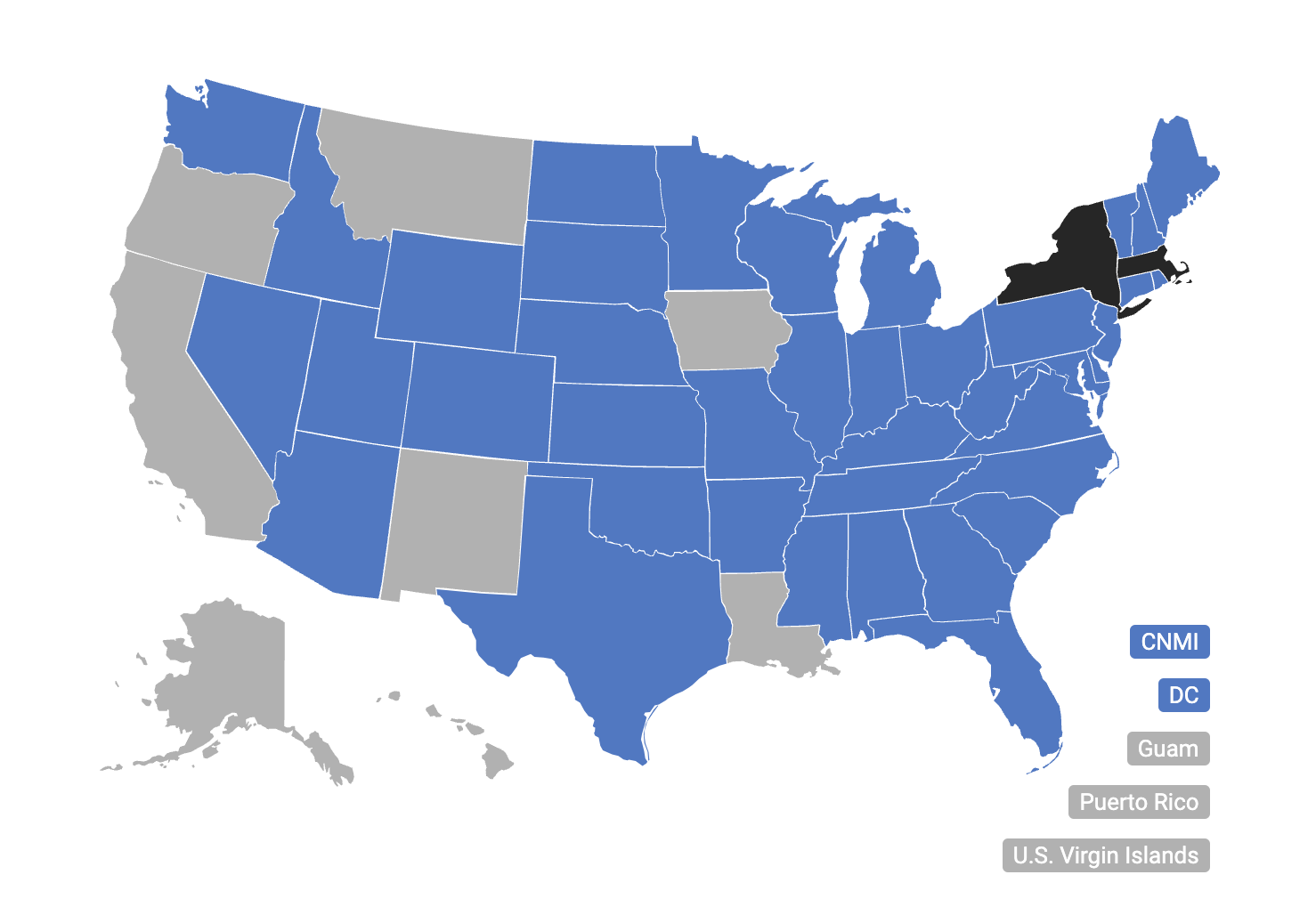
I'm licensed in New Jersey and authorized through PSYPACT to provide telehealth in the participating states, which currently are: Alabama, Arizona, Arkansas, Colorado, Connecticut, Delaware, District of Columbia, Florida, Georgia, Idaho, Illinois, Indiana, Kansas, Kentucky, Maine, Maryland, Michigan, Minnesota, Missouri, Nebraska, Nevada, New Hampshire, New Jersey, North Carolina, North Dakota, Ohio, Oklahoma, Pennsylvania, Rhode Island, South Carolina, Tennessee, Texas, Utah, Virginia, Washington, West Virginia, Wisconsin, Wyoming. States join PSYPACT over time, so the current list is maintained at psypact.gov.
Do you see clients in person?
No. My practice is fully virtual.
Do you take insurance?
I'm a private-pay, out-of-network provider. I provide a monthly statement with all the codes you need to submit to your insurer for out-of-network reimbursement. I can also provide a superbill. Check with your insurer about your out-of-network mental health benefits.
What are your fees?
Parent Guidance sessions are 60 minutes, and individual therapy sessions are 45 minutes. I'm happy to go over fees, and your out-of-network options, on the free 15-minute call. [Cancellation and payment policy]
What if I'm in crisis?
This practice does not provide emergency or 24-hour crisis services. If you or someone else is in immediate danger, call 911 or go to the nearest emergency room. In the United States, call or text 988 for the Suicide & Crisis Lifeline.
Still have a question?
Ask it on a free 15-minute call. No preparation required.